A Guarda → Oia
This is the first full walking stage on Galician soil after the river crossing, and one of the most scenic on the whole Coastal Route. You leave A Guarda along the open Atlantic and follow the shore north for about 14 km — past beaches, an old shellfish nursery and prehistoric rock carvings — until the great Cistercian monastery of Santa María de Oia rises straight out of the sea in front of you. It is an easy, low day with almost no climbing, but there is little shade, so carry water and sun cover.
Find a place to stay in Oia tonight
Check availability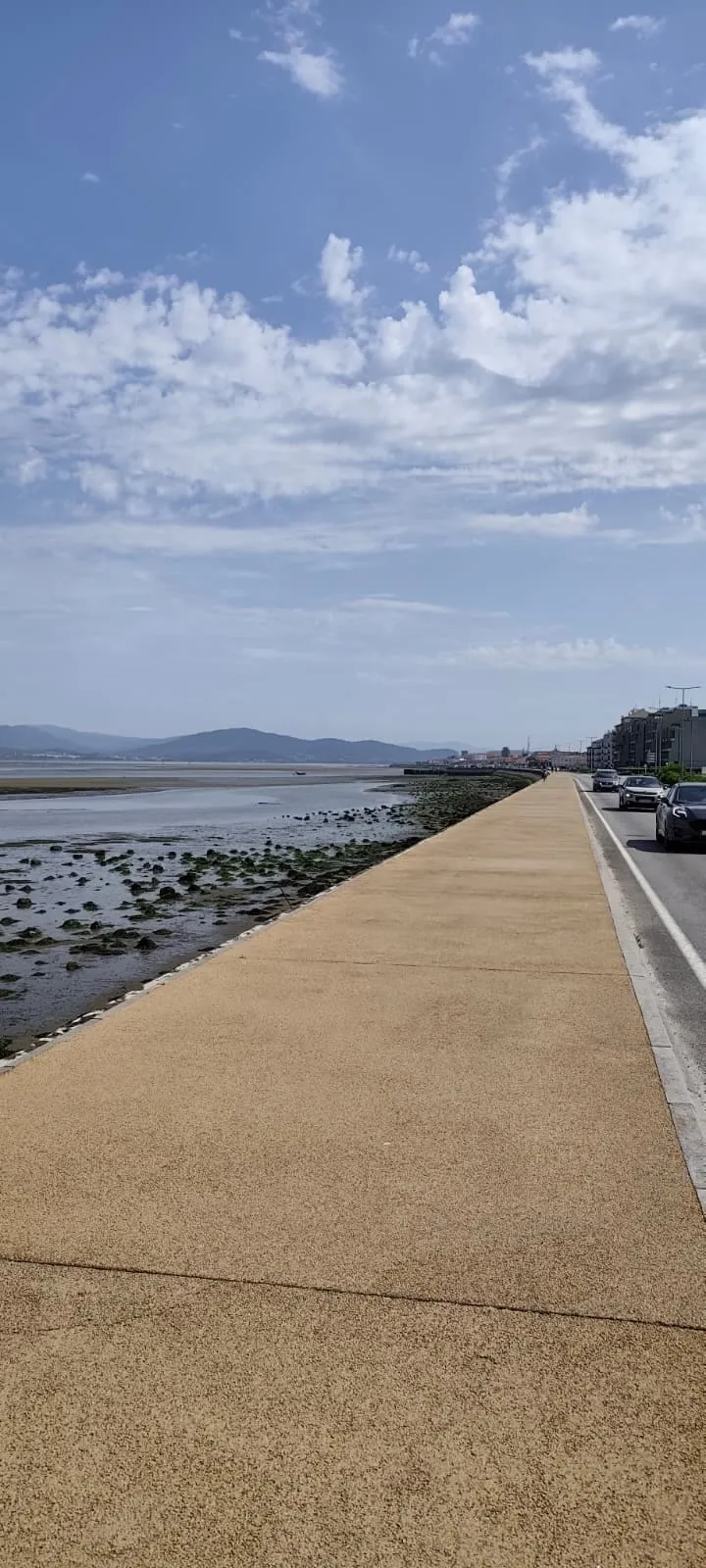
Coastal paths, boardwalk and quiet coast road (the PO-552) hugging the open Atlantic, with short rocky shoreline sections and gentle undulation; no sustained climbs, but little shade and a road camber for part of the way.
Stage map & GPX track
This map shows where the stage runs. For the exact route, the elevation profile and a downloadable GPX track, use these pilgrim resources:
Distance and difficulty
The stage is about 14.3 km and is rated easy: roughly 135 m of ascent spread over gentle undulation, with no sustained climb. Most walkers cover it in three to four hours at a steady pace. The two things to plan for are exposure and surface — the route stays beside the open Atlantic with very little shade, and a long middle section follows the coast road (the PO-552), where the camber and occasional traffic ask for care. Start with full water bottles and sun protection, especially from late spring to early autumn.
Route and variants
The waymarked Coastal Route leaves A Guarda heading north and barely loses sight of the sea all day. For most of the stage the official line runs along the PO-552 coast road and the shoreline paths beside it; in several places you can drop onto the rocks and beaches that run parallel to the road. There is no major inland alternative on this stage — the corridor between the hills and the Atlantic is narrow, so almost everyone walks the same scenic line into Oia.
The stage, section by section
You leave A Guarda past the Museo do Mar and pick up the coastal path. Within the first couple of kilometres you reach the beaches of Praia Fedorento and Praia Area Grande, then pass the Cetárea da Redonda, an 1890s seawater shellfish nursery cut into the rock. The path joins the PO-552 for the long open middle of the stage. At Portecelo, about two-thirds of the way, look for the Petróglifos de Portecelo (Bronze Age rock carvings) and a café — the last reliable stop before Oia. A little further the small Ermita de San Sebastián, rebuilt in 1770, overlooks the sea, and shortly afterwards the monastery and the village of Oia come into view.
The Monastery of Santa María de Oia
Oia is built around the Mosteiro de Santa María de Oia, a Cistercian monastery founded in 1137 and the only Galician monastery to sit right on the open Atlantic. Its monks defended this coast against pirates and corsairs for centuries — a role recognised in 1624 when the crown named it a Royal and Imperial Monastery — and the building later served as everything from a religious house to a prison camp during the Spanish Civil War. It is privately owned and under restoration, so opening for visits is irregular; even seen only from the outside, the church rising straight from the sea wall is the landmark of the stage.
Arriving in Oia
Oia is a small fishing village wrapped around its harbour and the monastery, not a town — expect a handful of bars and pensions rather than a full service centre. It makes a quiet, atmospheric overnight if you want to keep the stages short, but beds are limited and fill in high season, so book ahead. Many pilgrims instead pause in Oia for a meal and a look at the monastery and walk on toward Baiona the same day.
Where to sleep and eat
Accommodation around Oia is limited and seasonal, and the pilgrim beds are not in Oia itself but in Viladesuso, about 2 km before it: the Alojamiento Camino Portugués Oia (28 beds, open all year) and the Albergue da Estrela (15 beds, around €20 in season). For a private room, Casa Puertas (a casa rural) and Hotel A Raíña are the names that recur in current guides. The cliffside La Cala inn has closed permanently — ignore older listings that still show it. For food, the café at Portecelo is the dependable mid-stage stop, and Oia itself has a few harbour bars. Because supplies are thin, treat A Guarda as your real resupply point before setting out. Always confirm a bed the day before in high season rather than arriving on spec.
Stage logistics at a glance
Distance about 14.3 km; difficulty easy; roughly three to four hours walking. No bridge, ferry or boat on this stage — it is all on foot. Water and food are scarce between A Guarda and Portecelo, so start stocked. If Oia is full or you still have daylight, the next stage on to Baiona (about 18 km) can be linked, but that makes a long, exposed day of roughly 32 km — most walkers prefer to sleep in Oia or Viladesuso and keep the coastline enjoyable.
Where to stay
Related
Frequently asked questions
How long is the A Guarda to Oia stage?
Is the A Guarda to Oia stage hard?
Can I visit the Monastery of Santa María de Oia?
Where can I sleep in Oia?
Is there food and water on the way?
Can I walk along the coast the whole way?
Verified: 2026-08-12 Sources: https://www.gronze.com/galicia/pontevedra/viladesuso/alojamiento-camino-portugues-oia · https://alberguedaestrela.com/ · https://stingynomads.com/portuguese-coastal-camino-stages/ · https://thenwewalked.com/a-guarda-to-oia-camino-portuguese-coastal/ · https://www.elcaminoconcorreos.com/en/camino-portugues-the-portuguese-way/a-guarda-oia