Caminha → A Guarda: Ferry & Water Taxi — What's Running in 2026
The Minho river crossing between Caminha (Portugal) and A Guarda (Spain) operates daily. Several licensed water-taxi services replaced the old ferry: Xacobeo Transfer publishes nine fixed departures a day, Taxi Boat Peregrinos runs on request around the clock, the ride takes about 10 minutes, and a new municipal ferry is expected in summer 2026. This page covers operators, prices, booking and the overland backup.
Updated August 2026 · Jump to the 2026 timetable ↓
Crossing today? Find a place to stay in Caminha tonight before the boat.
Find a place to stayCrossing contacts — save to your phone
- +351 913 254 110 Taxi Boat Peregrinos — every 30 min, 07:00–17:00
- xacobeotransfer.com Xacobeo Transfer — online booking, 9 departures 07:00–15:30
- 112 Emergency (Portugal & Spain)
Verified August 2026
Operator schedules below reflect the current 2026 season and vary with tide and weather. Confirm the day's departures with the operator before your crossing — by phone, online, or at the dock. This site is independently operated and accepts no liability for missed crossings.
Caminha ferry crossing planner
Tell us when you expect to reach the Caminha dock — we’ll show the next likely boats and the arrival time in Spanish local time.
Caminha–A Guarda Ferry Timetable (2026)
Several licensed water-taxi services operate the Caminha–A Guarda crossing daily. The most reliable months are April to October; outside this window crossings are less frequent and more easily cancelled by weather. The boats are small — sometimes around six passengers — so book ahead in busy months.
| Operator | Frequency | Hours | Price | With bike | Booking |
|---|---|---|---|---|---|
| Taxi Boat Peregrinos | On request | 24/7 (weather permitting) | €6 | €7 | Phone or at the dock +351913254110 |
| Xacobeo Transfer | Nine departures daily | 07:00–15:30 (Nov–Mar: 08:00–09:00 only) | €9 | €10 | Online (website) +34613011226 |
| Taxi Mar Caminha | Daily (reduced in winter) | All year (winter ~1 departure/day) | €6 | €7 | Online (website) +351915955827 |
Boats run on Portuguese time. Spain is one hour ahead — a 10:00 departure arrives around 11:10 Spanish local time. Schedules flex with the tide; the operators post current departures on their websites and at the dock.
Upcoming Official Ferry (Summer 2026)
The Câmara Municipal de Caminha has announced a new municipal ferry for summer 2026: a shallow-draught vessel carrying roughly 50–60 passengers, designed to cope with the silted river mouth that defeated the old boat. The municipality has budgeted dock repair and dredging (~€30,000–40,000) to make the berth usable.
Status: announced, not yet operating. The historical ferry, the Santa Rita de Cássia, stopped in 2020 and will be dismantled rather than returned to service. Until the new vessel launches, the water taxis above are the crossing. We update this page when the launch is confirmed — see the live crossing status page for the latest.
Historical Official Ferry Fares (Reference)
For reference only — these were the Santa Rita de Cássia fares before the vessel stopped in 2020. Current water-taxi prices are in the operators table above. The new 2026 ferry's fares have not been announced.
| Ticket Type | Price | Notes |
|---|---|---|
| Adult (one-way) | €2.50 | Historical fare — vessel stopped in 2020 |
| Child under 4 | Free | No seat allocation |
| Child 4–12 | €1.50 | ID or passport could be requested |
| Bicycle | €1.50 | Additional charge on top of passenger fare |
| Return ticket | €5.00 | Slight saving vs two singles |
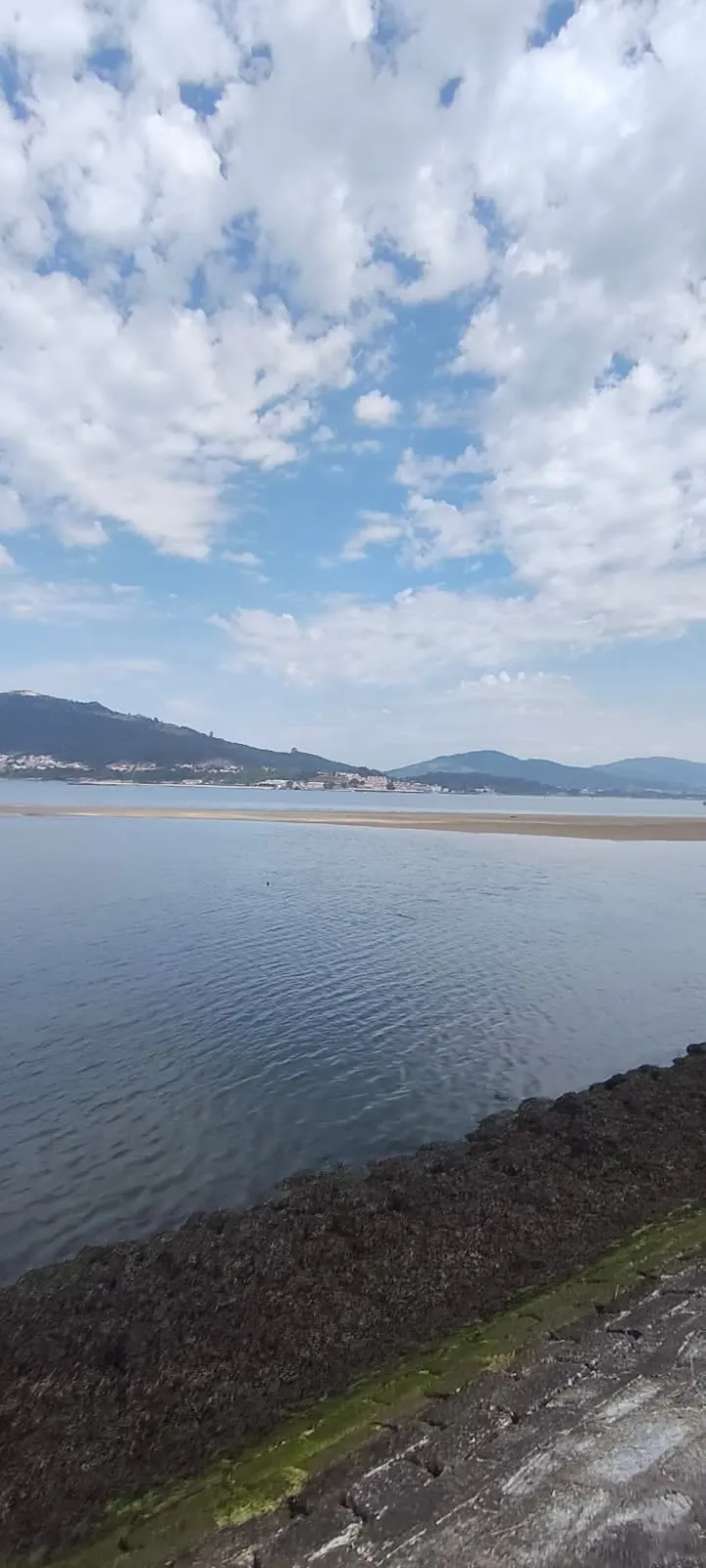
Check conditions before you cross
The crossing depends on tide and weather — small boats over shifting sandbanks. Check the evening before and the morning of your crossing.
Assoreamento: Why the Old Ferry Stopped
The siltation story explains why the crossing changed — and why the replacement boats are small and shallow.
The Minho river estuary is subject to assoreamento (siltation) — the accumulation of sand and sediment at the river mouth that periodically raises the seabed near the docks. The old ferry, the Santa Rita de Cássia (in service since 1995), was a medium-draught passenger boat that needed a minimum water depth to reach the berth. It stopped running in 2020; even after dock works on the Galician side finished in 2023, siltation kept it grounded, and the vessel is now slated for dismantling.
This is why today's crossing runs on small, shallow-draught water taxis — they pass over the sandbanks that defeated the ferry — and why the announced 2026 replacement is specifically a shallow-draught design. Siltation episodes still affect the estuary after dry summers and major Atlantic storms, so individual departures can be cancelled with little notice even in season.
Practical takeaway: the crossing operates daily, but always confirm the day's boats — online with Xacobeo Transfer, by phone with Taxi Boat Peregrinos, or at your albergue the evening before. If weather or river conditions stop everything, the overland detour below is always available.
Backup Options When No Boat Is Running
Option 1: Informal Fishermen's Boats (Legacy Fallback)
Only relevant if both licensed operators are unavailable · ~€5–6 per person
Before the licensed water-taxi services took over the crossing, local fishermen ran informal Xávegas (traditional flat-bottomed boats) and motorised water taxis across the Minho. A few still do. Treat this purely as a fallback: in 2026, your first call is Taxi Boat Peregrinos or Xacobeo Transfer (table above) — the fishermen's boats matter only on the rare day both scheduled services are down but the river is still crossable.
How to find one: ask your hospitalero or guesthouse host the evening before, go to the Cais da Rua dos Pescadores (the fishing dock, adjacent to the main berth), or call the Caminha tourist office for current contacts:
Known Water Taxi Operators (Taxi-Marítimo)
The following operators appear regularly in pilgrim community reports on Gronze.com, the Camino de Santiago forums, and the Confraternity of Saint James bulletin. These are local fishermen running informal river crossings — their availability is seasonal and subject to river conditions. Contact numbers change; always verify through your accommodation or the tourist office the night before.
Taxi Mar "Pauco"
One of the longest-active water taxi operators on the Minho. Widely cited by pilgrims completing the Coastal Route. Operates a motorised fishing vessel suited to the siltation conditions that ground the Santa Rita de Cássia.
+351 917 217 568Taximar "Nuno"
A regular operator known among Camino pilgrims, particularly during peak siltation periods when the main ferry is suspended. Operates from the same fishermen's dock area as Pauco. Pilgrim groups of 4–6 can negotiate a shared fare.
+351 914 532 531Mário Taxi Mar
Third active operator on the Caminha–Camposancos crossing, referenced in recent (2023–2025) pilgrim reports. When all three operators are available, competition at the dock is friendly — compare rates and boat size before choosing.
+351 919 237 021Departure — Portugal
Cais da Rua dos Pescadores, Caminha. The fishermen's dock is located immediately adjacent to the main ferry berth on the northern waterfront. Look for the traditional wooden fishing boats moored below the embankment wall.
Coordinates: 41.8734° N, 8.8358° W
Arrival — Spain
Camposancos, A Guarda municipality, Galicia, Spain. Water taxis land at Camposancos — a small fishing hamlet on the Spanish bank of the Minho, about 3.8 km south of A Guarda town centre on the waymarked route. Yellow Camino arrows resume from the landing point northward toward A Guarda.
From landing: ~45 min walk north to A Guarda centre (~3 km direct via Avenida Paseo Portugal)
Caminha Tourist Office
+351 258 921 952Mon–Fri 09:00–17:30. Best source for current operator names and mobile numbers — these change each season.
Câmara Municipal de Caminha
+351 258 919 400Fallback if tourist office is closed — ask for maritime services or river crossing assistance.
Xávegas & Taxi-Marítimo: What to Expect
- → Rate: approximately €5–6 per person, negotiated at the dock. Agree the total price before boarding — per-person or per-group, clarify which.
- → Crossing time: 20–30 minutes Caminha to Camposancos (slower than the main ferry; smaller engine against the Minho current).
- → Capacity: typically 4–8 persons per boat. Groups of pilgrims often share a boat and split the cost equally — ask at the dock if others are waiting.
- → Departure point: Cais da Rua dos Pescadores (fishermen's dock), Caminha — adjacent to but distinct from the main ferry berth. The landing point in Spain is Camposancos, not the A Guarda ferry terminal.
- → Payment: Cash only in euros. Carry €5–10 in small notes — fishermen rarely have change for €50 bills.
- → Availability: Not guaranteed. If the river is very rough (Beaufort 4+ on the estuary) or siltation is total even at the fishing dock, even Xávegas may not operate. In that case, use the overland alternative below — it is always available.
- → Life jackets: Ask if a life jacket is available, especially in choppy autumn conditions. Operators are experienced locals but equipment varies.
Option 2: Overland Detour via Valença and Tui
Always available · Train + 25 min walk · ~€3.60 by train
The guaranteed alternative when no boat is crossing: take the CP Minho line train from Caminha to Valença, the fortified Portuguese border town, then walk across the international bridge into Tui (Spain). This detour adds approximately 15–20 km of road/path walking compared to a direct ferry crossing, but it is always possible, in all seasons and all weather — the Tui–Valença bridge is pedestrian-accessible 24 hours a day.
Important route note: Tui is the gateway to the Camino Portugués Interior, not the Coastal Route. Most pilgrims caught by the ferry closure simply continue on the Interior Way and accept the route variation — both routes lead to Santiago de Compostela.
Train Journey: Caminha → Valença
| Segment | Duration | Approx Fare | Frequency |
|---|---|---|---|
| Caminha → Viana do Castelo | ~20 min | €2.50 | Hourly (weekdays) |
| Viana do Castelo → Valença | ~55 min | €3.60 (Caminha→Valença direct) | Roughly hourly on weekdays; reduced weekends |
| Valença → Tui (walk) | ~25 min on foot | Free | Bridge open 24/7 |
CP (Comboios de Portugal) Minho line. Check current times at cp.pt. Weekend and holiday schedules differ significantly from weekday service.
Step-by-Step: Overland Caminha → Tui
- 1. Walk from town centre to Caminha railway station (~5 min, 400m south of the main square).
- 2. Buy a ticket to Valença at the station window or vending machine (~€3.60). Check departure time.
- 3. Train journey Caminha → Valença: ~35 minutes. Scenic journey along the Minho valley.
- 4. From Valença station, walk north through the medieval walled city (~20 min) to reach the international bridge.
- 5. Cross the Ponte Internacional Valença–Tui on foot (~1.5 km, ~20 min). The bridge has a dedicated pedestrian path.
- 6. You arrive in Tui (Spain). Currency stays euros. The Camino Portugués Interior yellow arrows begin immediately from the bridge entrance.
- 7. Get your credential stamped at Tui Cathedral or the Albergue Buen Camino before continuing north.
Getting to the Ferry Dock
The ferry departs from Cais de Caminha (Caminha Dock), located on the northern edge of the old town, approximately 400 metres from the main square (Praça do Conselho). From the town centre, walk north along Rua Visconde de Sousa Rego toward the river — the dock is clearly signposted.
The dock has a small covered waiting area and a ticket kiosk that opens 30 minutes before each scheduled departure. There are no toilets at the dock itself — use the facilities in town before heading down. The path from the square to the dock is mostly flat and wheelchair accessible.
Frequently Asked Questions
Staying in Caminha tonight?
Municipal albergue (walk-in from 14:00), private hostels, and hotels — check live availability before you arrive.
Plan the rest of your trip
Affiliate links — we may earn a commission at no extra cost to you.