Caldas de Reis → Padrón
The penultimate stage, and an easy, atmospheric one. The route leaves the spa town of Caldas de Reis over an old bridge and follows gentle country — forest tracks, small parishes and stone bridges — down to Padrón, the town at the heart of the Saint James legend, where his stone boat is said to have moored. About 18.9 km with no hard climb, leaving you within a single day of Santiago.
Find a place to stay in Padrón tonight
Check availability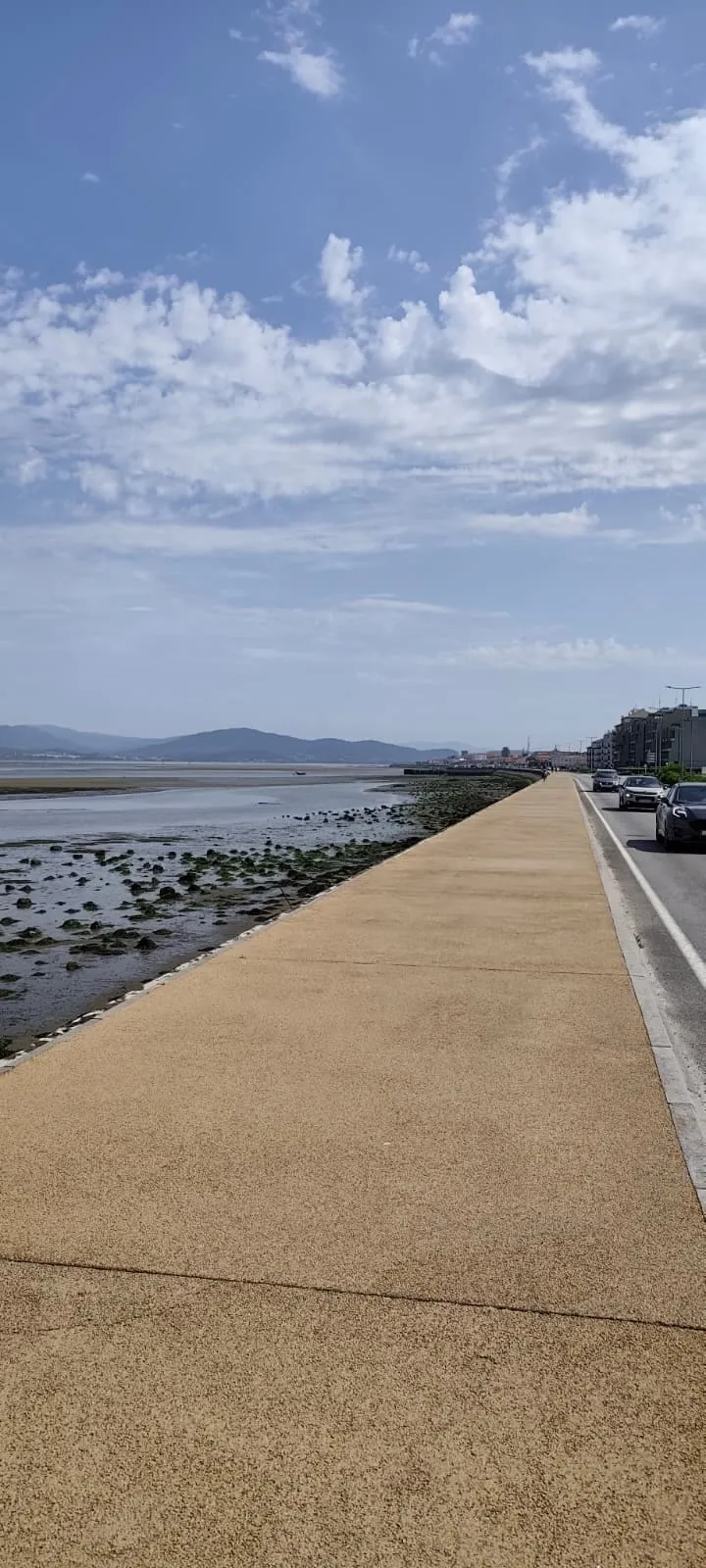
Gentle Galician country — forest tracks, old stone bridges and quiet lanes through small parishes — with modest ups and downs and no hard climb, following the Bermaña and then the Ulla rivers into Padrón.
Stage map & GPX track
This map shows where the stage runs. For the exact route, the elevation profile and a downloadable GPX track, use these pilgrim resources:
Distance and difficulty
The stage is about 18.9 km with roughly 200 m of ascent — moderate for length but easy underfoot, with only modest ups and downs and no real climb. The walking is mostly on forest tracks and quiet lanes. Five hours or so is typical. It is a relaxed day, and many pilgrims walk it knowing the cathedral is now within reach the following morning.
Route and variants
From Caldas de Reis the waymarked route runs as a single line through Carracedo, Valga and Pontecesures into Padrón. The one notable option is the Herbón detour: a short side trip (adding roughly 3 km) to the Convento de Herbón, the Franciscan monastery whose monks are credited with introducing the famous Padrón peppers (pementos de Padrón) to Galicia. It has a donativo pilgrim albergue and rejoins the main route near Padrón.
The stage, section by section
You leave Caldas de Reis over the Puente Romano del Río Bermaña and pass the 16th-century Capela de San Roque on the way out of town. The route climbs gently to Carracedo, with its church of Santa Mariña, then continues through O Pino — where the restored Muíño do Xalleiro watermill stands by the path — to San Miguel de Valga. The final approach crosses the River Ulla on the Puente Romano de Pontecesures and enters Padrón.
Arriving in Padrón
Padrón is steeped in the founding legend of the Camino. According to tradition, the disciples of Saint James brought his body by sea to Iria Flavia (old Padrón) and moored their stone boat to a rock called the Pedrón — now kept beneath the altar of the church of Santiago in the town, and the source of Padrón's name. The town is also famous for its small green peppers and for its riverside gardens and market. It is a fitting, story-rich place to spend the last night before Santiago.
Where to sleep and eat
Padrón has a good range of pilgrim beds. Albergue Murgadán, beside the church of Santiago in the old centre, is the central budget option — 38 places, bunks from about €18 and three private rooms, open 1 March to 15 November. Guesthouses, apartments and hotels round it out (Villa Galicia, Casa dos Cantares and the Hotel Chef Rivera, known for its restaurant). If you take the Herbón detour, the Franciscan monastery's donativo albergue has 30 beds, takes no reservations, requires a credential and opens 1 April to 31 October. For food, look for the local pementos de Padrón — fried green peppers, most of them mild, the occasional one hot. Book ahead in season, as Padrón is a popular last stop before the city.
Stage logistics at a glance
Distance about 18.9 km; difficulty moderate but easy underfoot; five hours or so for most. The main optional decision is the Herbón monastery detour (about 3 km extra) with its donativo albergue. Services are good in Padrón at the end. The final stage, Padrón to Santiago (about 24–25 km), reaches the cathedral and the Praza do Obradoiro.
Where to stay
Related
Frequently asked questions
How long is the Caldas de Reis to Padrón stage?
Is the Caldas de Reis to Padrón stage hard?
What is the Pedrón stone in Padrón?
Should I take the Herbón detour?
What are Padrón peppers?
Where can I sleep in Padrón?
Verified: 2026-08-12 Sources: https://www.gronze.com/galicia/coruna/padron/albergue-murgadan · https://www.gronze.com/galicia/coruna/herbon/hospital-peregrinos-san-antonio-herbon · https://thenwewalked.com/caldas-de-reis-to-padron-camino-portuguese/ · https://www.pilgrim.es/en/portuguese-way/stage-23-pontevedra-caldas-de-reis/ · https://stingynomads.com/portuguese-coastal-camino-stages/